
March 2026
Are helmets effective for plagiocephaly
Helmet therapy can be effective for plagiocephaly when a baby has moderate to more significant asymmetry and treatment begins during a period of active skull growth.
Parents usually ask this question after trying tummy time, repositioning, or physiotherapy without seeing enough change. A helmet recommendation does not automatically mean the condition is severe, and it does not automatically mean you acted too late.
Effectiveness depends on age, measurement band, and whether head shape is improving over time.
What Happens During Helmet Treatment

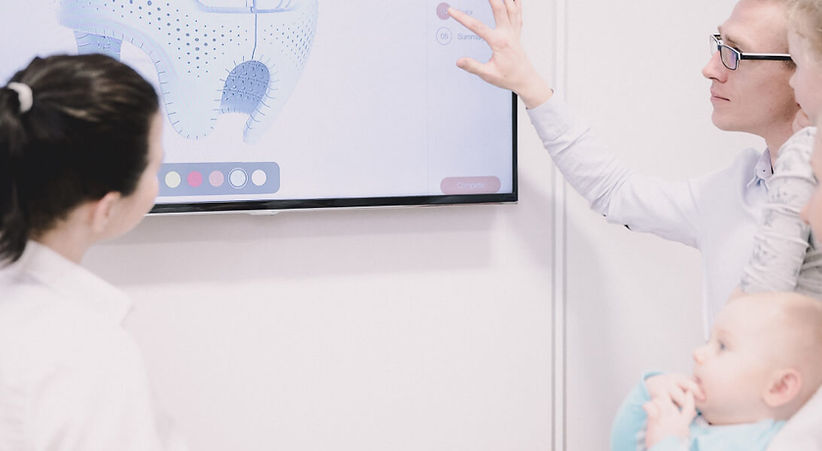
A Plagiocephaly Helmet, also called a cranial remolding orthosis, is a custom-fitted device worn to guide head growth into a more balanced shape as the skull naturally expands. It does not squeeze the skull into position; instead, it provides gentle contact in fuller areas and space where growth is needed. If helmet therapy is started, the process typically includes an assessment, digital scan or measurements, custom fitting, and periodic follow-up adjustments. Progress is monitored using repeat CVAI or CI measurements, and change happens gradually across weeks to months rather than immediately.
Why Age Ranges Matter for Effectiveness
Age matters because skull growth is fastest in early infancy and gradually slows as bones become less moldable. Helmets are most commonly considered between about 4 and 7 months of age when growth is rapid and responsive, although treatment decisions may extend beyond this window depending on severity and remaining growth. After about 8 to 9 months, improvement can still occur but is often slower and less pronounced.
Understanding Plagiocephaly and Brachycephaly Differences

Plagiocephaly refers to asymmetry where one side of the back of the head is flatter, while brachycephaly refers to symmetrical flattening across the back that makes the head appear wider and shorter. Helmet decisions differ slightly between these patterns because plagiocephaly is guided primarily by asymmetry measurements such as CVAI, and brachycephaly is guided by width-to-length proportions such as CI. This distinction matters because two babies can appear similarly flat but require different evaluation logic.
CVAI and CI as Contextual Bands, Not a Verdict

Clinicians use standardized measures to describe severity and track trends over time. Helmet discussions often become more active when CVAI approaches roughly 10 to 11 percent or when CI is markedly elevated, for example around 100 percent or higher, especially if the baby is at least about 4 months old and the numbers are not improving across repeated checks. These ranges are contextual reference bands rather than universal rules, and they are interpreted together with age and growth trajectory.
What Clinicians Check Before Recommending a Helmet
Before recommending helmet therapy, clinicians assess head shape from multiple angles, evaluate neck range of motion, and look for torticollis or a consistent head-turn preference that keeps pressure on one area. They also rule out rarer conditions such as craniosynostosis, where skull bones fuse early and the head shape does not follow a pressure-and-growth pattern. This distinction ensures helmet therapy is used only when growth guidance is appropriate.
What Research Shows About Helmet Effectiveness

Research on helmet therapy includes both randomized trials and observational studies. A well-known randomized trial in milder cases found limited added benefit compared with natural course, while multiple cohort studies in moderate to severe cases report meaningful reductions in asymmetry when helmets are started during active growth. Clinicians usually define success as a measurable reduction in asymmetry relative to the starting point rather than achieving a perfectly symmetric head shape.
What improvement realistically means
Helmet therapy is a practical commitment that includes near full-time wear, regular refitting appointments, and monitoring for skin comfort. In many regions, the baby helmet for flat head cost can reach several thousand dollars and insurance coverage varies, which understandably influences decision-making. Families weigh potential improvement against time, comfort, and financial considerations as part of a balanced choice.
If You Do Not Use a Helmet, What Will and Will Not Happen
If a helmet is not chosen, clinicians typically continue conservative management with positioning strategies, physiotherapy when needed, and repeat measurements. Many mild cases improve as babies roll, sit, and reduce time spent on the back while awake, while more pronounced asymmetry may improve only partially. What will not automatically happen is developmental harm from a thoughtful decision, because plagiocephaly and brachycephaly are primarily shape conditions. If you are unsure about timing, read our guide on when it is too late to fix a flat head.
Common questions parents ask
Is helmet therapy effective for every baby with plagiocephaly?
No, effectiveness depends on severity, age at start, and measurement trend over time.
Does a CVAI around 10 to 11 percent always mean a helmet is needed?
No, clinicians interpret this range together with age and whether the numbers are improving.
Can helmets help brachycephaly as well as plagiocephaly?
Yes, helmets can help brachycephaly, but CI patterns and age influence decisions.
Can a helmet still work after 8 or 9 months?
Improvement can still occur in some babies, but change is usually slower as growth decreases.
Is helmet therapy uncomfortable for babies?
Most babies adapt well, though temporary skin redness and heat are monitored during follow-ups.
Does insurance usually cover helmet therapy?
Coverage varies widely by region and insurer, so families often confirm details before starting treatment.
Can plagiocephaly return after helmet treatment?
Once growth slows and shape improves, recurrence is uncommon when positioning habits are balanced.
When do clinicians rule out craniosynostosis?
Clinicians rule it out when head shape pattern or examination suggests early bone fusion rather than positional flattening.

Writen by Elly van der Grift
Elly van der Grift is a pediatric physiotherapist with over 30 years of experience guiding families in safe sleep positioning and head shape support using evidence-based methods.