

April, 2026
Plagiocephaly Measurements Made Easy with Skully Care
Many parents notice a flat spot on their baby's head in the first weeks of life and wonder whether it is something to be concerned about. Flat head syndrome, medically known as plagiocephaly or brachycephaly depending on where the flattening occurs, is very common. Up to one in five babies develops some degree of head shape asymmetry. The reassuring news is that when it is caught early, it is highly treatable. The first step is always the same: get an accurate measurement so you know exactly what you are dealing with.
What causes a flat head in babies?
A flat head develops when a baby spends too much time in the same position. In the first months of life, a baby's head grows rapidly. When a baby consistently rests in one position, the skull follows the path of least resistance and grows away from the area of pressure. Over time this results in a flat spot. A preference to always turn the head to the same side, known as positional preference, is the most common underlying cause.
Why measuring early makes all the difference

The ideal time to take a first flat head measurement is around 5 to 6 weeks of age. A flat head develops because a baby's head grows rapidly and, when a baby consistently rests in the same position, the skull follows the path of least resistance and grows away from the area of pressure. The earlier this is identified, the more effectively repositioning can steer that growth in the right direction. When a flat spot is caught at 5 to 6 weeks, most cases can be resolved with a simple repositioning approach and a few targeted exercises, often within just a few treatment sessions. Waiting longer does not make treatment impossible, but it does make the process more gradual. Early measurement is what opens the door to the most effective and least invasive treatment pathway.
How parents can measure at home in 5 minutes
You do not need to visit a clinic or buy any special equipment to measure your baby's head shape. With the Skully Care app, any parent can take an accurate flat head measurement at home using just a smartphone. The only preparation needed is to dampen your baby's hair slightly with water. This makes the hairline clearly visible so the app can accurately map the contours of the head. Once the hair is wet, open the app, position your baby on a flat surface, and follow the step-by-step photo guide. Within 5 minutes you will have a clear result showing whether a flat spot is present and how significant it is.
What do the measurement results mean?
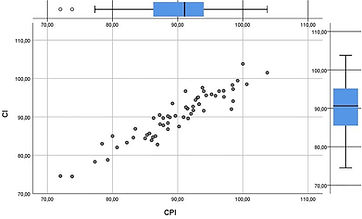
Skully Care calculates two key values from your photo. The Cephalic Index (CI) measures the ratio between the width and length of the head, indicating whether the overall shape is within a normal range. The Cephalic Vault Asymmetry Index (CVAI) measures the difference in length between the left and right diagonal of the head, which is the most sensitive indicator of asymmetry. A CVAI of 3.5% or higher is considered clinically significant. Both values are displayed in a clear, easy-to-read graph so you can understand your baby's head shape at a glance, without needing a medical background to interpret the numbers.
What to do after you measure

Once you have your results, Skully Care helps you decide on the right next step. If the measurements suggest a repositioning approach is appropriate, the app provides personalised exercises you can start at home right away. These are simple, clearly explained, and easy to weave into your daily routine with your baby. If the results indicate that professional support would be beneficial, the app helps you find a qualified therapist near you. You are never left wondering what to do with your results. Whether the next step is home exercises or an appointment with a specialist, Skully Care points you in the right direction straight away.
When repositioning is not enough: helmet therapy
For most babies, a consistent repositioning approach started early is enough to achieve a significant improvement in head shape. However, if repositioning does not produce sufficient results after a period of dedicated effort, helmet therapy can be considered as a next step. A custom-made cranial helmet gently guides the skull into a more symmetrical shape as the baby grows. It is a safe and effective option when used at the right age, typically before 12 months. Regular flat head measurements using Skully Care throughout the process allow you and your therapist to track progress objectively and make informed decisions about whether to continue, adjust, or escalate treatment.
Scientifically validated, trusted by over 1,000 therapists

Skully Care is not just a convenient tool, it is a clinically validated one. The app has been independently tested for validity and reliability by external scientific institutions, confirming that it meets the standards required for use in professional healthcare settings. Over 1,000 therapists worldwide trust Skully Care as part of their daily practice, and a baby is measured using the app every 2 minutes. That level of adoption by healthcare professionals is a strong signal that the measurements parents take at home are just as meaningful as those taken in a clinic. You can read the full scientific publications.
Tracking your baby's progress over time
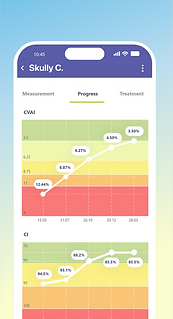
One of the most motivating things about using Skully Care is being able to see improvement in real numbers. The app stores your measurements over time and displays them as a progress graph, so you can clearly see whether your baby's head shape is responding to treatment. Watching the CVAI drop from 6% to 3% over a matter of weeks gives parents concrete reassurance that the exercises are working. It also helps you have more informed conversations with your therapist, because you arrive at every appointment with objective data rather than just a feeling that things look a little better.
Get started with Skully Care today
Skully Care was founded by Elly van der Grift and Freek Noz, a mother-and-son team. Elly is a pediatric physiotherapist and Freek is an engineer who brings innovation to their mission. Together they built Skully Care to bridge the gap between clinic and home, so that no parent has to wait weeks for an appointment to find out whether their baby's head shape needs attention. Sign up today, take your first measurement in 5 minutes, and get the clarity you need to take the right next step for your baby.
Written by Elly van der Grift

Elly van der Grift is the co-founder of Skully Care and a pediatric physiotherapist with over 30 years of experience. Her mission is to provide top care for babies with skull deformities. With her infectious enthusiasm, she shares simple, effective tips that can make a big difference for your baby. Working with Elly, you'll feel confident and supported in your baby’s journey to better health.