
Flat head baby: Causes, Signs, and What Parents Should Know
A flat head baby describes a common infant head shape change where part of the skull becomes slightly flattened from repeated pressure in the same position. This condition is medically called positional plagiocephaly or brachycephaly or positional scaphocephaly.
It usually develops between 1 and 6 months of age, when babies spend a lot of time lying on their backs and skull growth is fastest. It is harmless and improves as babies grow and move more. Importantly, positional flattening does not affect brain development.
Medically reviewed:
Elly van der Grift - Pediatric Physiotherapist
April 2026
— Key facts
Quick Facts Parents Should Know
Parents often worry when they first notice a flat area on their baby’s head. Understanding the basics can reduce unnecessary stress and help parents recognize what is normal. The following quick facts summarize what doctors and pediatric therapists commonly explain to families:
• A flat head baby usually develops between 2 and 6 months of age.
• Laying for a prolonged duration in the same position can temporarily change head shape.
• This condition is called positional plagiocephaly or brachycephaly.
• It is purely cosmetic and does not affect brain growth or intelligence.
• Head shape often improves as babies begin rolling and sitting.
• Early recognition allows simple repositioning strategies to help.
— Early signs
What Parents Usually Notice First
Most parents first notice a head shape change during routine activities like bathing their baby or looking at photos from above. The earliest sign is usually a flat spot at the back or on one side of the head. From some angles the head may appear slightly wider or asymmetrical.
Some babies also show subtle facial changes. One ear may appear slightly forward, or the forehead on one side may look more prominent. These differences are usually mild and become clearer when looking down from the top of the head.

Parents may also notice that their baby prefers turning the head to one side during sleep. This head-turning preference can increase pressure on one area and contribute to flattening over time.
Recognizing these early signs is helpful because gentle changes in positioning can often guide the head back toward a more symmetrical shape.
— Understanding shapes
Recognizing Different Head Shapes
Understanding the difference between normal variation and positional flattening helps parents interpret what they see. Babies’ heads naturally vary in shape, especially during the first year of life. Some flattening is extremely common and often temporary.
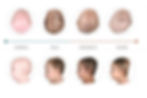
A normal head shape appears rounded when viewed from above. The back of the head curves gently and both sides are symmetrical.
In plagiocephaly, flattening occurs on one side of the back of the head. This can make the head look slightly diagonal from above. The ear and forehead on the same side may appear slightly forward.
In brachycephaly, the flattening occurs evenly across the back of the head. The head may appear wider and shorter from front to back.
Parents who want to understand the difference more clearly can explore plagiocephaly vs brachycephaly, review plagiocephaly pictures, or learn more about baby head asymmetry.
— Causes
Why Flat Head Syndrome Happens
The main reason a flat head develops in babies is that skull growth is fastest in the first months of life. During this period, the skull bones are not yet fully fused, which allows the brain to expand rapidly. Because growth is so active, repeated pressure on one area can influence the direction of that growth over time.
Age | Growth | Growth (inches) |
Birth | — | — |
1 month | +3 cm | +1.2 in |
2 months | +2 cm | +0.8 in |
4 months | +2 cm | +0.8 in |
6 months | +2 cm | +0.8 in |
8 months | +1 cm | +0.4 in |
10 months | +1 cm | +0.4 in |
12 months | +1 cm | +0.4 in |
Several everyday factors can contribute to positional flattening. Sleeping on the back, which is recommended for safe sleep, places gentle pressure on the back of the head. Spending long periods in the same position can also increase pressure on one area.
Another common contributor is torticollis baby, a condition where neck muscles are tight on one side. Babies with torticollis may turn their head more easily in one direction, leading to repeated pressure on the same spot.
Premature babies can also be more likely to develop head flattening because their skull bones are softer and they may spend longer periods lying down during early development.
— Clinical evaluation
How Doctors Evaluate Head Shape
Pediatricians and pediatric physiotherapists evaluate head shape through a careful combination of observation, physical, and digital examination.
Doctors first look at the baby’s head from multiple angles. They examine the back of the head, ear position, and forehead shape. They also observe how the baby moves the neck and whether a head-turning preference is present.

Another important step is distinguishing positional flattening from craniosynostosis baby, a rare condition where skull sutures close too early. Craniosynostosis causes a different head shape pattern and usually requires specialist evaluation.
Parents can learn more about this evaluation process in baby head measurement and how doctors diagnose plagiocephaly.
— Medical measurements
Head Shape Measurements Explained
Clinicians use measurements to better understand head symmetry. Two common measurements are the cranial index (CI) and the cranial vault asymmetry index (CVAI).

The cranial index compares the width and length of the head. It helps identify conditions like brachycephaly baby, where the head appears wider than usual.
The cranial vault asymmetry index measures the difference between diagonal head lengths. It helps quantify asymmetry in conditions like plagiocephaly baby. These measurements help clinicians track improvement over time and guide treatment decisions.
Parents who want to understand these measurements more deeply can explore CVAI head measurement or baby head measurement guide.
— Medical measurements
Check Your Baby’s Head Shape at Home
Parents often want reassurance about their baby’s head shape before scheduling an appointment.
Today, digital tools like Skully Care allow parents to perform a simple head symmetry check at home.
Using a smartphone and a guided process, parents can capture a top-down image of their baby’s head. The digital analysis estimates measurements such as head width and asymmetry.

Check your baby’s head symmetry using a simple guided scan. A quick digital check can help parents understand whether head shape appears typical or if professional advice may be helpful.
This early screening approach allows parents to monitor changes over time and seek help if needed.
— Treatment
Treatment Options for Positional Flattening
Most babies with positional flattening improve naturally as they begin rolling, sitting, and moving more. However, certain strategies can encourage balanced head positioning.
Repositioning techniques are usually the first step. Parents may gently encourage babies to turn their heads in different directions during sleep and play. Increasing supervised tummy time also reduces pressure on the back of the head.
Physical therapy may help when neck tightness or torticollis baby is present. A therapist can guide stretching and positioning exercises to improve neck mobility.

In cases where repositioning therapy doesn’t work, doctors may recommend helmet therapy baby. A specialized helmet gently guides skull growth toward a more symmetrical shape, depending on the age and severity.
Parents can learn more about these options in helmet therapy baby, repositioning techniques for plagiocephaly, and torticollis baby exercises.
— Prevention
Prevention Strategies Parents Can Start Early
Simple daily habits can help reduce the risk of positional flattening. One of the most effective strategies is supervised tummy time while the baby is awake.
Parents can also rotate the baby’s position in the crib so the baby naturally turns the head in different directions to look toward the room. Limiting time in car seats, swings, and other containers can also help reduce pressure on the back of the head. Encouraging babies to look toward toys or voices from different sides can promote balanced head movement.
Parents can explore additional strategies in: tummy time baby, baby sleep position head shape, and preventing flat head baby.
— Timing
Age-Based Guidance for Parents
Head shape changes often follow predictable patterns during infancy. Understanding how concerns differ by age can help parents decide when to monitor and when to act.
At three months, flattening may first become noticeable because babies spend a lot of time lying on their backs. At this stage repositioning and tummy time are usually effective.
At four months, doctors may begin measuring head symmetry if flattening appears more pronounced. Babies are also starting to gain more neck control.
By six months, many babies begin rolling and sitting more frequently. Increased movement naturally reduces pressure on the skull and often leads to improvement.
Parents can explore specific guidance in plagiocephaly 3 month old, plagiocephaly 4 month old, and flat head baby 6 months.
— Professional advice
When Parents Should Seek Professional Advice
Most head shape changes are mild and improve over time. However, some situations may benefit from professional evaluation.
Parents may consider consulting a pediatrician or physiotherapist if flattening becomes more noticeable over several weeks. Limited neck movement, persistent head turning preference, or facial asymmetry may also warrant evaluation.
Doctors may also evaluate babies when head shape changes appear unusual or when there is concern about craniosynostosis baby.
Early assessment provides reassurance for many families and ensures that appropriate support is provided when needed.
A quick digital check can help parents understand whether head shape appears typical or if professional advice may be helpful.
This early screening approach allows parents to monitor changes over time and seek help if needed.
— Myth busters
Common Myths About Flat Head Baby
Parents often encounter confusing information online. Clarifying common myths can reduce unnecessary worry.
One common myth is that positional flattening affects brain development. Research consistently shows that positional plagiocephaly does not affect brain growth or intelligence.
Another misconception is that helmet therapy is always required. In reality, many babies improve with repositioning and normal development alone.
Some parents also worry that placing babies on their backs causes harm. In fact, back sleeping is the safest sleep position and significantly reduces the risk of sudden infant death syndrome.
Understanding these facts helps parents focus on safe sleep and healthy development.
— FAQs
Frequently Asked Questions
Is a flat head baby permanent?
In most cases, head shape improves naturally as babies grow and move more.
Does plagiocephaly affect brain development?
No. Positional head flattening does not affect brain growth or intelligence.
When does flat head syndrome usually appear?
Flattening most often develops between 2 and 6 months of age.
Can tummy time help improve head shape?
Yes. Regular tummy time reduces pressure on the back of the head and supports balanced development.
When should parents worry about head shape?
Parents may seek advice if flattening worsens or if the baby has difficulty turning the head.
Do all babies with plagiocephaly need helmets?
No. Many cases improve with repositioning and natural growth.
How can parents check head symmetry at home?
Parents can perform a guided baby head measurement using Skully Care, a digital tool designed for infant head shape screening.
— Keep reading
Related Articles for Parents
Parents who want to explore specific topics in more detail may find these guides helpful:
• plagiocephaly vs brachycephaly
• baby sleep position head shape
These articles provide deeper explanations and practical guidance for common parent questions.
— Not sure if you should worry?
Check Your Baby’s Head Shape
If you are unsure about your baby’s head shape, a quick digital check can provide reassurance.
Use a guided smartphone scan to measure your baby’s head symmetry in minutes.The scan provides a simple report that can help parents understand whether head shape appears typical or whether professional advice may be helpful.
Early awareness helps parents make informed decisions while keeping their baby’s development on track.