

March 2026
Plagiocephaly Measurements: What Do the Numbers Mean?
Plagiocephaly measurements use specific numbers, such as the Cranial Vault Asymmetry Index (CVAI) and the Cephalic Index (CI), to quantify how symmetrical or wide a baby’s head shape is.
These numbers reflect skull growth patterns caused by pressure distribution and do not automatically mean a medical or brain problem.
Understanding the measurements helps parents and clinicians make calm, informed decisions.
What CVAI measures

The Cranial Vault Asymmetry Index, or CVAI, measures the difference between two diagonal lines across the skull. It shows how uneven one side of the head is compared to the other.
A higher CVAI means greater asymmetry and the more severe the plagiocephaly.
What CI measures
The Cephalic Index also called Cephalic Ratio, or CI (CR), measures head width compared to head length. It is calculated by dividing the width of the head by its length and multiplying by 100.
This number helps identify brachycephaly, where the back of the head appears wider and flatter. Now you know what the numbers mean, here's how to get your baby's own:
How clinicians interpret CVAI ranges
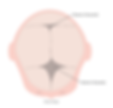
The most noticeable soft spot sits on the top front of the head and is called the anterior fontanelle. A smaller one at the back is called the posterior fontanelle. Doctors check these areas during routine exams because they provide clues about growth and development.
How clinicians interpret CI ranges

For CI, typical values in infants often range roughly between 75 and 90, depending on age and reference charts.
Higher values can indicate brachycephaly. The exact interpretation depends on age norms and clinical context.
Why measurements matter
Head shape changes follow pressure patterns. When babies consistently rest on one area, growth shifts toward areas of least resistance.
Measurements allow clinicians to track whether pressure patterns are improving over time rather than relying only on visual impressions. To understand what this process involves in practice, read our article on what happens at a plagiocephaly evaluation.
What the numbers do not mean
Plagiocephaly measurements reflect skull symmetry, not brain growth. Positional plagiocephaly is typically cosmetic and does not affect cognitive development. The numbers help guide repositioning or therapy, not determine intelligence or neurological function.
A higher number does not automatically mean helmet therapy. Measurements must always be interpreted alongside a baby’s age, movement, muscle balance, and overall development.
If you are unsure how your baby’s head shape compares to typical ranges, a structured scan can provide clear CVAI and CI values for calm monitoring.
When measurements are most useful
Plagiocephaly measurements reflect skull symmetry, not brain growth. Positional plagiocephaly is typically cosmetic and does not affect cognitive development. The numbers help guide repositioning or therapy, not determine intelligence or neurological function.
A higher number does not automatically mean helmet therapy. Measurements must always be interpreted alongside a baby’s age, movement, muscle balance, and overall development.
If you are unsure how your baby’s head shape compares to typical ranges, a structured scan can provide clear CVAI and CI values for calm monitoring.
What improvement looks like
Improvement means the CVAI number gradually decreases and head symmetry becomes more balanced over time. Perfect symmetry is not required. Clinicians look for steady measurable change together with healthy neck movement and development.
If you would like to monitor head symmetry objectively over time, regular scans can help track measurable progress rather than relying only on visual changes.
Common questions parents ask
Is a high CVAI dangerous? In positional plagiocephaly, CVAI reflects asymmetry but does not indicate brain injury.
Does CI change as babies grow? Yes, CI can change as skull growth patterns and positioning habits shift.
Can measurements replace a clinical exam? No, measurements support but do not replace a full pediatric evaluation.
When should I measure my baby’s head shape? Measurement is most useful in the first year, especially between 2 and 8 months when growth is rapid.

Writen by Elly van der Grift
Elly van der Grift is the co-founder of Skully Care and a pediatric physiotherapist with over 30 years of experience. Her mission is to provide top care for babies with skull deformities. With her infectious enthusiasm, she shares simple, effective tips that can make a big difference for your baby. Working with Elly, you'll feel confident and supported in your baby’s journey to better health.